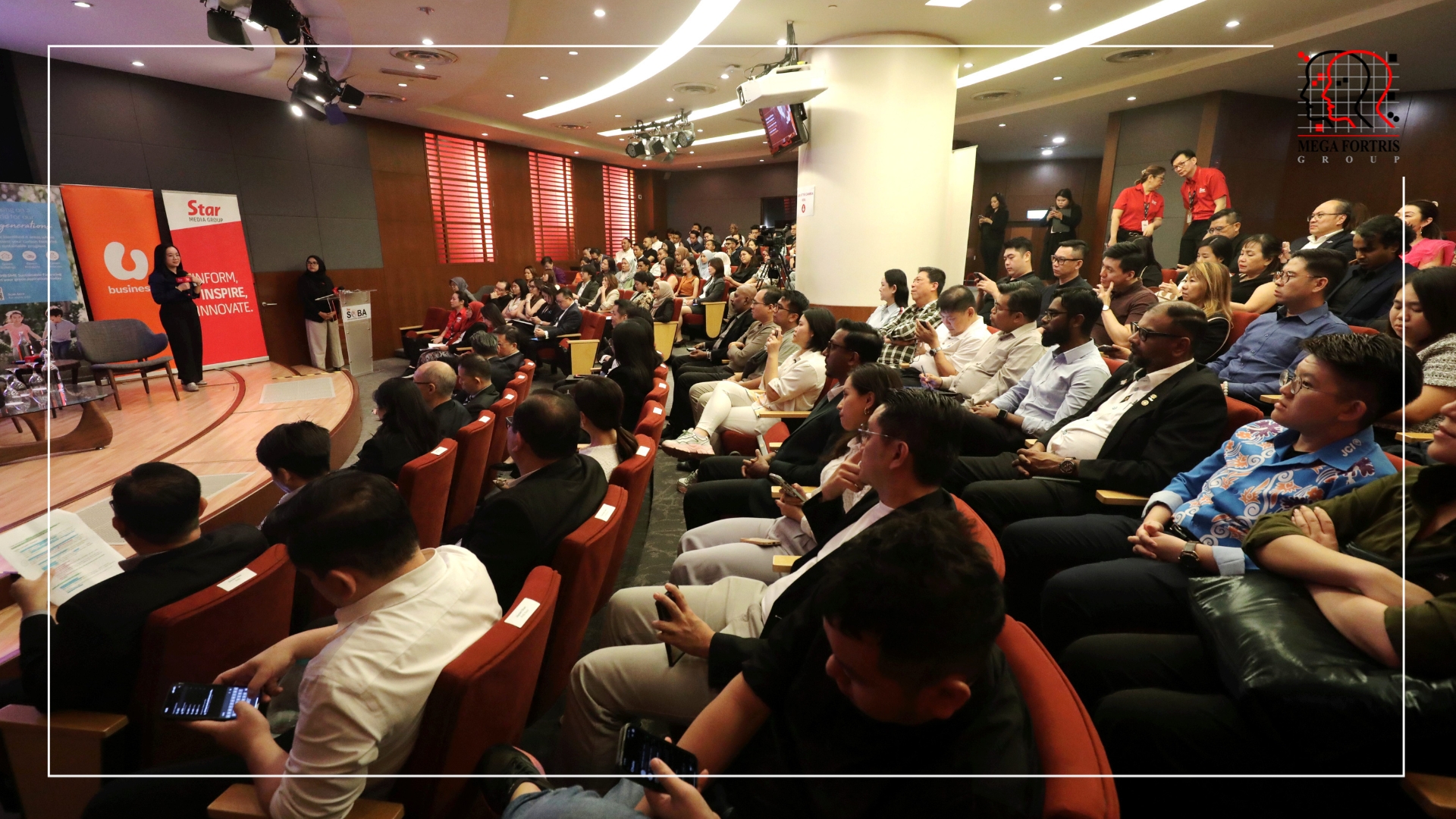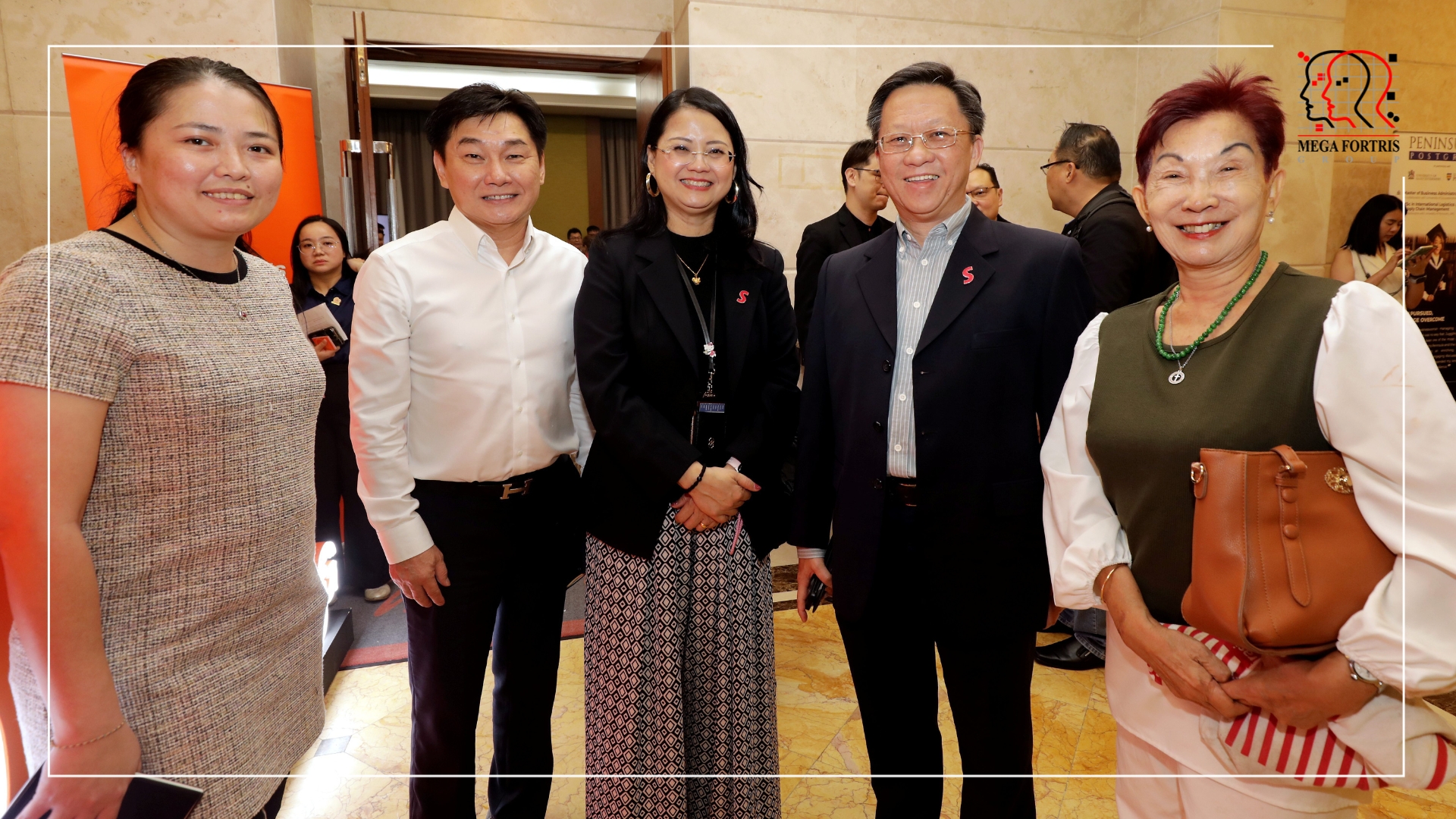


17 July 2025 — At the recent SOBA LAB Petaling Jaya 2025, leaders from both the public and private sectors gathered to unpack the pressing issues surrounding tariffs, taxes, and Malaysia’s future in the global marketplace, as well as how one could raise funds and access capital for business growth.
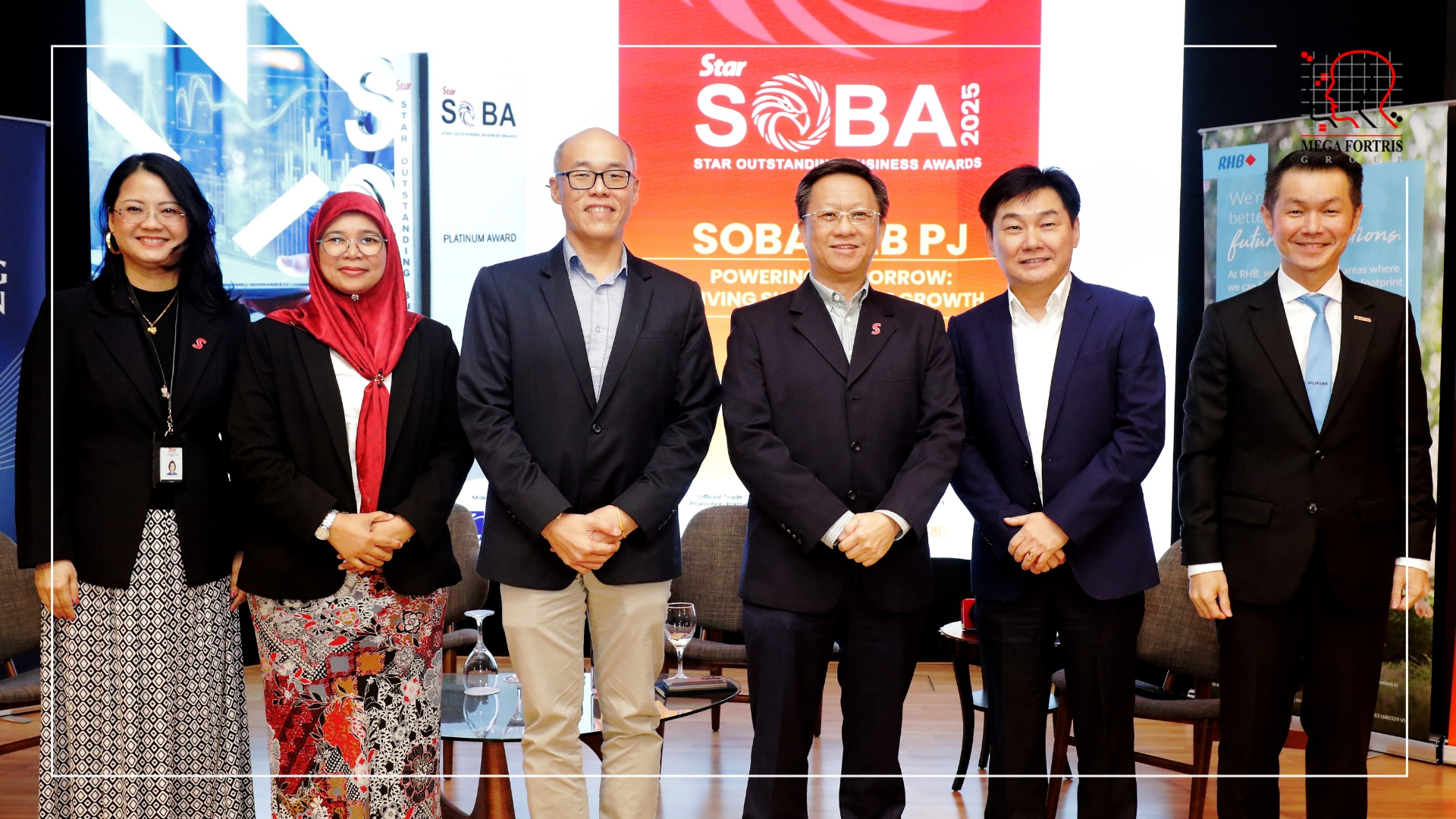
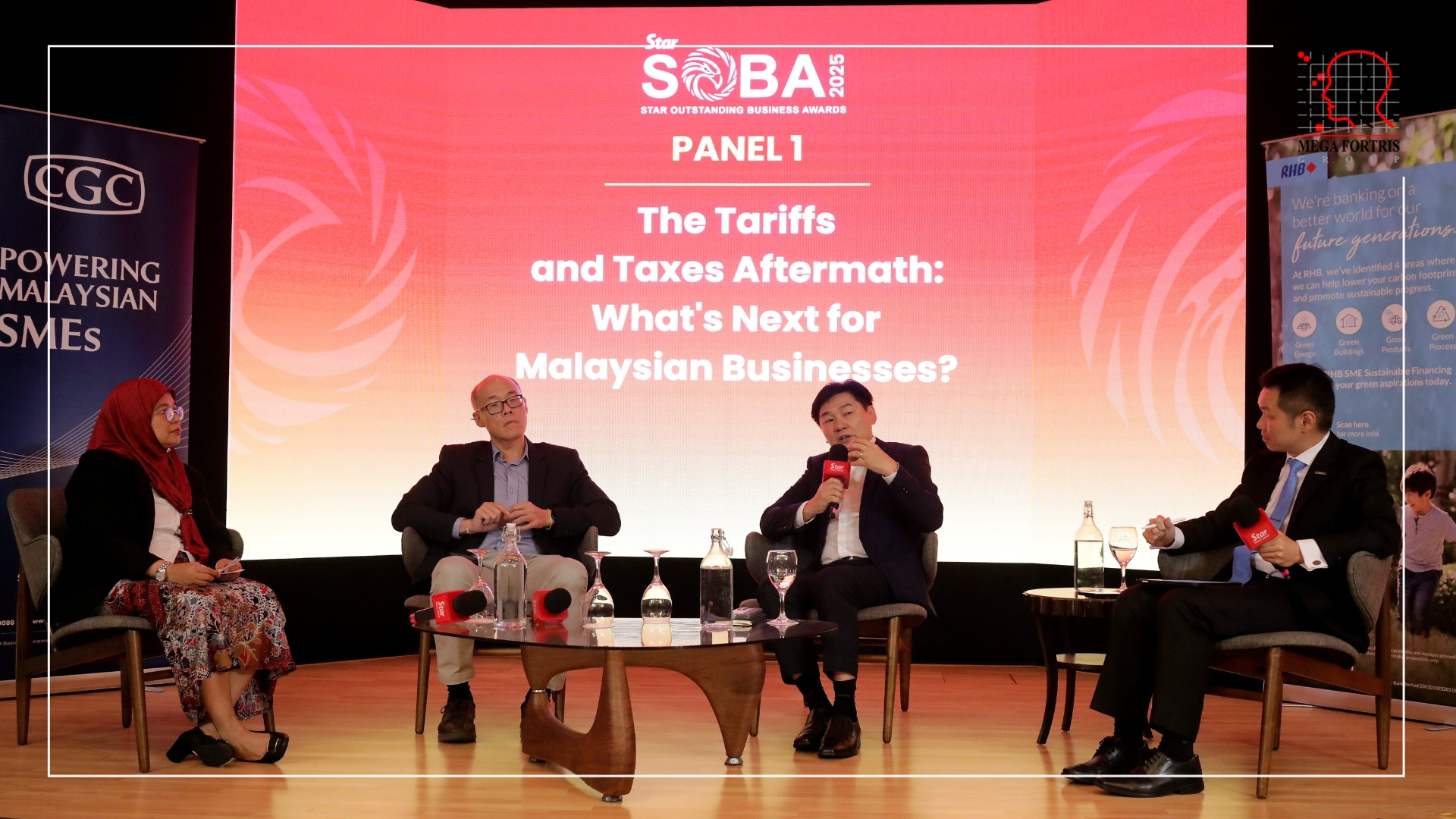
Mega Fortris’ Group Managing Director and Group CEO, Datuk Adrian Ng, was invited as a panelist at SOBA LAB PJ 2025, where business leaders and policymakers gathered to discuss “The Tariffs and Taxes Aftermath: What’s Next for Malaysian Businesses?”
Joining the session were fellow panellists Noor Hayati Binti Abu Noh, Director of Strategic Planning Division of MATRADE and Dr. Jason Cheah, COO of PKT Logistics Group Sdn Bhd. The discussion was a deep dive into global shifts, supply chain disruptions, ESG commitments, and what SMEs can do to futureproof their businesses.
Resilience in the Face of Global Disruption
Representing a company with 94% of business rooted in exports, Datuk Adrian shared how recent trade tensions and policy uncertainties are affecting even globally diversified businesses.
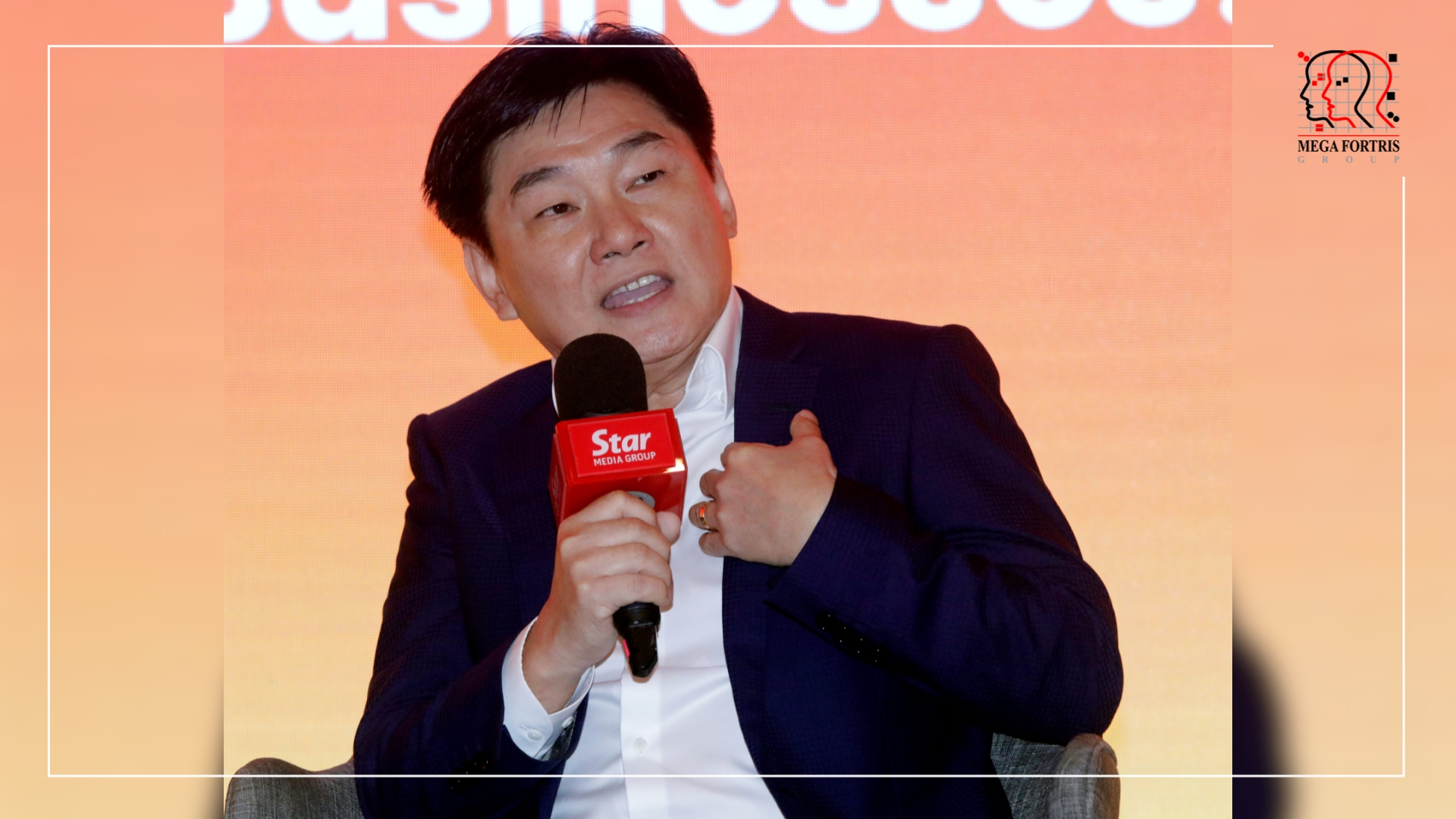
“Tariffs are just one part of a larger, compounded problem,” he said. “It’s no longer just about numbers or percentages — it’s about how resilient your business model is. You can’t rely on theory anymore. This is where understanding your business deeply and knowing when to pivot becomes critical.”
Drawing a powerful analogy, he compared the current trade climate to a body with hairline fractures: difficult to detect, even harder to heal, and requiring deliberate and careful management.
Adapting to Change and Finding Opportunity
When asked about practical steps SMEs can take to reduce their reliance on traditional export markets like the USA, the panel offered forward-looking advice.
Ms. Noor shared that MATRADE is actively supporting export diversification, with 90 new market development programmes in the pipeline across Africa, South America, and the Middle East. These emerging markets may be smaller but are growing rapidly and hold strong potential.
Datuk Adrian Ng encouraged SMEs not to be discouraged by fluctuating policies and instead look for opportunities in adversity. He cited the importance of export diversification and praised MATRADE’s role in supporting Malaysian businesses expanding globally. He reinforced this with his own experience, citing that MATRADE played a crucial role in helping Mega Fortris grow its global footprint, who is now exporting to over 90 countries with just 6% of revenue coming from Malaysia.
“Twenty years ago, we were a MATRADE beneficiary. They helped us reach markets we never imagined we could. If you’re an SME looking to expand internationally, MATRADE will do their utmost to support you, and it’s free.”
He also shared a real-world example of how Mega Fortris’s products are deeply embedded in the global supply chain, including within the electoral process in Malaysia:
“Security seals may seem niche, but they’re critical. You’ve likely seen them in action and have indirectly used it. During Malaysia’s GE15, those orange ballot box seals were ours. We protect the integrity of elections, logistics, and more across the world.”
He used this to highlight the untapped global value of niche Malaysian products, and how small innovations can play large roles in supply chain security, from elections to logistics.
Strategies for SMEs: Going Beyond Tariffs
The panel concluded with practical advice for businesses navigating rising costs, supply chain risks, and market volatility:
Reassess your export dependencies.
- Tap into Free Trade Agreements (FTAs) and explore emerging markets such as Africa, South America, and the Middle East.
- Leverage digital tools like multi-currency accounts to ease payment and conversion issues.
- Begin tracking ESG data now to future-proof operations for sustainability reporting requirements.
For SMEs managing cash flow in a fluctuating global market, the panel stressed the importance of financial tools like multicurrency accounts (MCAs).
Adrian noted that Mega Fortris has saved significantly by consolidating 15 currencies into one account, which simplifies transactions and reduces risk. “You have tools, you have banks here supporting you. There’s no fixed rule. Just find the opportunity inside the chaos,” he advised.
Looking Ahead: ESG, Upskilling and Vision
For the medium to long term, the panel agreed that the focus must shift toward:
- ESG data collection and reporting
- Diversifying markets and supply chains
- Upskilling teams for cross-border compliance
- Staying anchored to your company’s mission and values
As Dr. Jason put it, future partnerships may hinge on ESG readiness, not just price or service. The push for carbon transparency and digitalisation is no longer optional. It’s the new baseline.
Final Thoughts
The SOBA LAB PJ 2025 panel left one key message: resilience is built in crisis. With the right strategy, support, and mindset, Malaysian businesses can turn today’s trade challenges into tomorrow’s global opportunities.
Datuk Adrian’s message was clear: resilience, adaptability, and foresight are no longer optional. They are survival tools. He reiterated the famous saying, “In crisis, there is always an opportunity.” As Malaysia continues to grapple with changing global dynamics, Mega Fortris stands as a testament to how local expertise, global vision, and strong partnerships can lead businesses through uncertainty.
Whether it’s through embracing ESG, exploring untapped markets, or finding strength in small products, the path forward is clear: Adapt, diversify, and lead with purpose.
#MegaFortris #PreventionProtectionPeaceOfMind